Storm Cleanup & Emergency Tree Service in Birmingham, AL
Fallen trees, hangers, and leaners after Birmingham's storms — tree off the structure first, cleanup second, and everything documented for your insurer.
Get a Free Quote
Request storm cleanup help
Or leave a voicemail at (205) 555-0142. We do not answer live calls — the request form is fastest. If anyone is in danger or a line is down, call 911 / your utility first.
Birmingham storm reality
Birmingham sits in Dixie Alley, and severe weather comes in two main seasons — spring, and again in late fall. High wind, saturated soil, and heavy rain together are what bring trees down: a healthy-looking tree in soaked ground, a dead limb nobody noticed, or a hanger left from the last storm. Keeping trees healthy and well maintained — regular trimming and pruning, dead wood removed, crowns thinned — reduces the risk, but no tree is storm-proof.
What to do right after a storm
- Stay clear. Keep people and pets away from the fallen tree, cracked limbs, and leaners. A hung-up limb can drop without warning.
- Never cut near a downed power line. Wait until it is safe, and call the utility first if a line is involved. If a tree is touching a main line, the utility has to be involved before anyone cuts.
- Do not climb on the tree or the roof to "help." A tree on a structure is under load and can shift.
- Take photos of the damage before cleanup starts — for your insurer and your own records.
- Fill out the request form and describe what fell, what it is on (house, car, fence, driveway), and whether lines are involved.
How storm cleanup usually goes
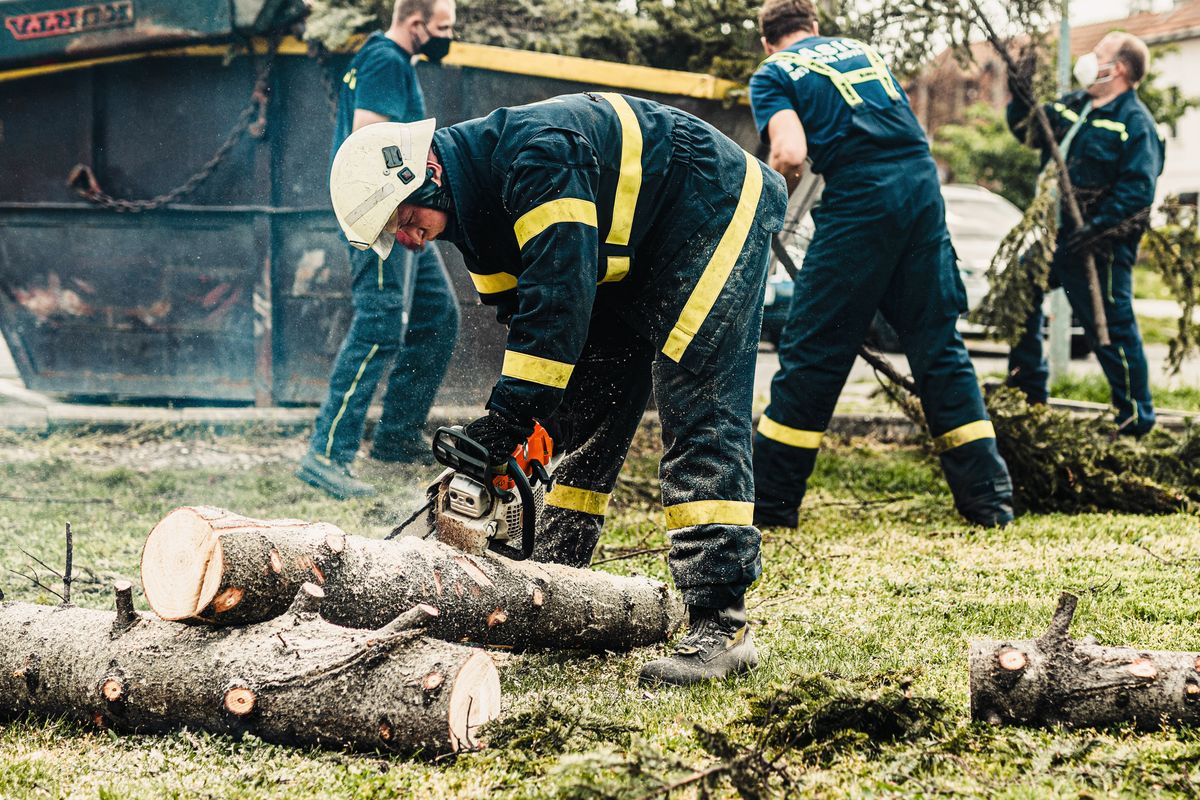
- Tree off the structure first. The crew's first job is getting the tree off your roof, car, or fence — carefully, so it does not cause more damage coming off.
- Hangers and leaners stabilized before the next storm — cracked limbs still in the canopy are the next failure waiting to happen.
- Cleanup second — wood, brush, and debris hauled away, drive and walks blown clean.
- Paperwork for your adjuster — photos and an itemized invoice. Insurance often covers removal of a tree that fell on a house, garage, or fence; coverage for a tree that fell in open yard is a different question, so check your policy.
What storm work typically costs
These are typical ranges only, never quotes. Your price comes from an on-site estimate.
- Emergency and storm removal generally runs 1.5–2 times standard removal pricing.
- Fallen-tree removal often costs less than standing-tree removal, because no climbing or rigging is needed to bring it down — it is already down.
- Standard removal ranges still apply as the baseline: typically $300–$2,500, with a typical job around $700–$1,200.
Before the next storm
- Schedule a yearly checkup on your trees' health — disease and structural weakness caught early are cheaper than a removal after a failure.
- Have dead wood, hangers, and limbs over the roof removed before storm season, not during it.
- Know which trees are closest to the house, the driveway, and the lines — those are the ones to watch after every big wind event.
Common questions
Will my insurance pay for storm tree removal?
Often, when the tree fell on a covered structure like a house, garage, or fence. A tree that fell in open yard with no structure damage is covered less often. Keep photos and the itemized invoice, and call your insurer early.
Should I wait for the insurance adjuster before cleanup?
Take photos first, then get the tree off the structure — waiting with a tree on your roof risks more damage (and more water intrusion) than a prompt, documented removal. Your insurer can advise on their process.
Do you handle trees blocking a driveway or street?
Yes — trees on structures and blocked driveways go to the front of the queue after a storm. Trees on a public street are the city's to clear; tell us where it is and we will point you right if it is a city tree.